

How to Protect Your Garden from Frost: Complete Winter Survival Guide

How to Protect Your Garden from Frost: Complete Winter Survival Guide
There’s nothing worse than waking up to a beautiful autumn morning only to find your thriving garden blackened and wilted from an unexpected frost. Whether you’re trying to extend your harvest season, protect tender perennials, or overwinter young plants, knowing how to properly protect your garden from frost can make the difference between success and heartbreak.
Table Of Content
- Understanding Frost: Know Your Enemy
- When to Expect Frost
- Method 1: Row Covers and Fabric Protection
- Method 2: Mulching for Root Protection
- Method 3: Watering Before Frost
- Method 4: Cold Frames and Cloches
- Method 5: Heat Sources and Frost-Fighting Techniques
- Method 6: Bringing Plants Indoors
- Emergency Frost Protection: When You’re Caught Off Guard
- Plant-Specific Protection Strategies
- Season Extension: Beyond Frost Protection
- Final Thoughts: Building a Frost Protection Plan
This comprehensive guide covers everything you need to know about frost protection, from understanding when frost will strike to implementing proven protection methods that actually work.
Understanding Frost: Know Your Enemy
Before we dive into protection methods, it’s important to understand what frost actually is and how it damages plants.
What is frost? Frost occurs when temperatures drop below 32°F (0°C), causing water vapor in the air to freeze and form ice crystals on surfaces—including plant leaves and stems.
Types of frost: Light frost (29-32°F / -2 to 0°C) damages tender plants but hardy vegetables survive. Hard frost (below 28°F / -2°C) kills most tender plants and damages even some cold-hardy crops. Killing frost (24°F / -4°C or below) ends the growing season for all but the hardiest plants.
How frost damages plants: Ice crystals form inside plant cells, causing cell walls to rupture. When temperatures rise and ice melts, cells collapse, leaving plants blackened, wilted, and dead. Frost also desiccates (dries out) plant tissues, especially when combined with wind.
When to Expect Frost
Timing is everything when it comes to frost protection. Here’s how to predict when frost will strike:
Know your frost dates: Every region has average first and last frost dates. Search online for “[your city] frost dates” or consult your local agricultural extension office. Remember these are averages—actual dates can vary by 2-3 weeks.
Watch the forecast: Pay attention to evening weather forecasts in late summer, fall, and early spring. Frost is likely when overnight temperatures drop to 36°F (2°C) or below with clear skies and calm winds.
Understand microclimates: Low-lying areas, valley bottoms, and open fields frost first. South-facing slopes, areas near buildings or water, and sheltered spots stay warmer. Know the cold pockets in your garden.
Warning signs: Clear skies after sunset, dropping humidity, calm winds, and rapidly falling temperatures all indicate frost is likely.
Method 1: Row Covers and Fabric Protection
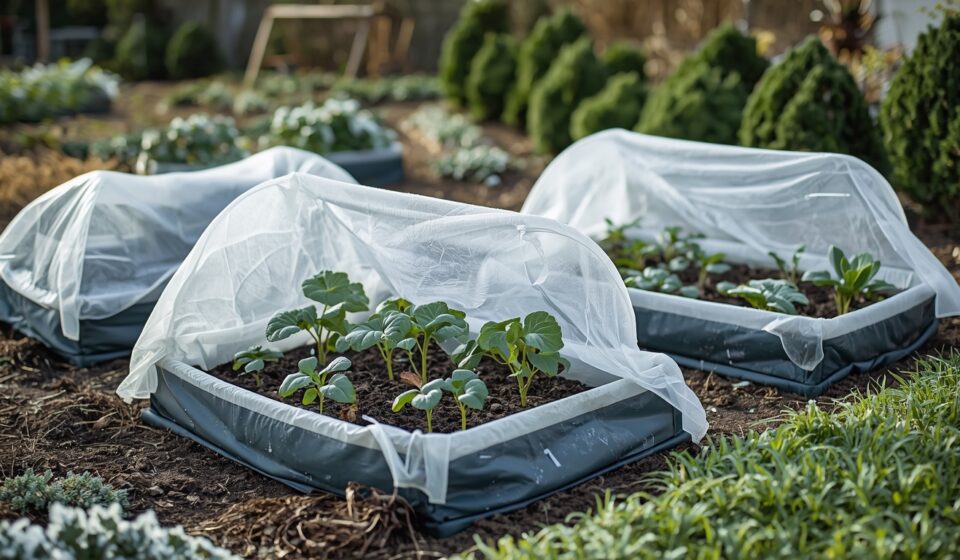
Row covers are lightweight fabrics that trap heat around plants while allowing light and water to penetrate. They’re one of the most effective and versatile frost protection methods.
How they work: Row covers trap heat radiating from soil and create a microclimate 4-8°F (2-4°C) warmer than ambient air temperature. Thicker covers provide more protection but less light transmission.
Types of row covers: Lightweight covers (0.5 oz/sq yd) protect against light frost and extend the season by 2-4 weeks. Medium weight (1.25 oz/sq yd) protects to 28°F (-2°C) and extends the season 4-6 weeks. Heavy covers (2 oz/sq yd) protect to 24°F (-4°C) but reduce light by 30-50%.
Installation tips: Drape fabric directly over plants or support with hoops to create a tunnel. Secure edges with soil, rocks, or landscape pins to prevent wind from blowing covers off. Allow some slack so plants have room to grow.
When to use: Install covers when frost is forecast and remove the following morning after temperatures rise. For extended protection, covers can remain in place for weeks but must allow adequate ventilation on warm days.
Best for: Protecting large garden beds, rows of vegetables, low-growing plants, and extending harvest seasons.
Method 2: Mulching for Root Protection
Mulch insulates soil and protects plant roots from freeze-thaw cycles that can heave plants out of the ground and damage root systems.
How it works: Mulch moderates soil temperature fluctuations, keeping soil warmer in winter and preventing rapid freezing and thawing. It also retains moisture, which helps plants withstand cold stress.
Best mulch materials: Straw (6-8 inches deep) is lightweight, insulating, and easy to apply and remove. Shredded leaves (4-6 inches) are free and effective but can mat down. Pine needles (3-4 inches) are attractive and won’t compact. Wood chips (2-3 inches) work well for perennials but take longer to break down.
Application timing: Apply winter mulch after the ground freezes, not before. Early mulching can prevent dormancy and keep soil too warm, encouraging late growth that frost will kill. Wait until consistent cold weather arrives.
Special technique – hilling up: For roses, fruit trees, and tender perennials, mound mulch or soil 8-12 inches high around the base (crown) of the plant. This protects the most critical part—where roots meet stems.
Best for: Protecting perennials, overwintering root crops (carrots, parsnips), young trees and shrubs, and fall-planted bulbs.
Method 3: Watering Before Frost
It sounds counterintuitive, but watering before a frost can actually protect plants. Here’s the science behind this method:
How it works: Water has high heat capacity, meaning it absorbs and releases heat slowly. Moist soil retains more heat than dry soil and releases that heat gradually overnight, keeping air temperatures around plants slightly warmer. Well-hydrated plants are also more frost-resistant than drought-stressed plants.
Proper technique: Water thoroughly the day before an expected frost, preferably in the afternoon. Ensure soil is moist to a depth of 4-6 inches. Don’t water if the ground is already saturated—soggy soil doesn’t help and can harm plants.
Effectiveness: This method typically raises temperatures 2-4°F (1-2°C) around plants, which can be enough to prevent light frost damage. It’s most effective in combination with other protection methods.
Important note: Do not water again in the morning after frost. Let plants thaw naturally in shade—direct sun on frozen, wet plants increases damage.
Best for: Protecting large areas that are impractical to cover, mature plants with extensive root systems, and as insurance when light frost is predicted.
Method 4: Cold Frames and Cloches
Cold frames and cloches create mini-greenhouses that protect individual plants or small garden areas.
Cold frames: These are essentially bottomless boxes with transparent tops (glass or plastic). They capture and retain solar heat, creating a warm microclimate. A well-designed cold frame can be 15-20°F (8-11°C) warmer than outside air on sunny days.
Building a cold frame: Construct a simple frame from wood, straw bales, or cinder blocks. Top with an old window, plexiglass, or clear plastic. Position facing south for maximum sun exposure. Slope the top from back to front for rain runoff and optimal sun angle.
Management tips: Vent cold frames on sunny days to prevent overheating (anything above 75°F / 24°C). Close before afternoon to trap heat for overnight. Add insulation (straw bales, blankets) on very cold nights.
Cloches: These are individual plant covers—anything from repurposed milk jugs with bottoms cut off to specially designed glass or plastic cloches. They’re perfect for protecting individual transplants or tender plants.
DIY cloches: Cut 1-gallon plastic milk jugs in half, remove caps for ventilation, and place over plants. Use 2-liter soda bottles the same way. Recycle large glass jars or purchase traditional bell cloches for a more attractive option.
Best for: Starting seedlings early, hardening off transplants, protecting individual plants, extending the season for lettuce and greens.
Method 5: Heat Sources and Frost-Fighting Techniques
For valuable plants or severe frost events, active heat sources can save the day.
Christmas lights: Old-fashioned incandescent Christmas lights (not LEDs) generate enough heat to protect small plants. String lights through bushes or wrap around tree trunks, then cover with fabric or plastic to trap heat.
Heat lamps and space heaters: Electric heat sources work well for protecting valuable plants in small areas. Use outdoor-rated equipment and exercise extreme caution around water and flammable materials.
Water-filled containers: Place large containers (buckets, barrels, jugs) filled with water near plants. Water absorbs heat during the day and releases it slowly overnight, moderating temperature swings.
Smudge pots and candles: Commercial growers sometimes use these, but they’re generally impractical and potentially dangerous for home gardens. A single candle under an overturned pot can protect small cloches.
Best for: Small areas with high-value plants, potted plants that can’t be moved indoors, emergency protection during unexpected hard frosts.
Method 6: Bringing Plants Indoors
Sometimes the simplest solution is the best one. If you can move plants inside, do it.
Container plants: Move pots into a garage, shed, or even just against the house under an overhang. Any shelter helps, and most plants don’t need light for a night or two.
Tender perennials: Geraniums, rosemary, basil, and other frost-sensitive perennials can be potted up and moved indoors for winter. Cut back by one-third, pot into containers slightly larger than root balls, and place in a sunny window.
Tropical plants: Hibiscus, bougainvillea, and other tropicals must come inside before frost. Acclimate gradually over 7-10 days to prevent shock from sudden environment changes.
Temporary protection: Even moving plants to a covered porch or garage for one cold night can save them. They don’t need ideal conditions for short-term protection.
Best for: Container gardens, tender perennials worth saving, valuable or irreplaceable plants, small collections.
Emergency Frost Protection: When You’re Caught Off Guard
Frost warning comes on the evening news and you’re unprepared. Here’s what to do:
Use whatever you have: Old sheets, blankets, burlap, tarps, cardboard boxes, newspapers—anything that provides a layer between plants and cold air helps. Avoid plastic directly on foliage (it conducts cold), but plastic works fine over hoops or frames.
Support covers: Use stakes, tomato cages, buckets, or anything to keep covers from resting directly on plant foliage. Air space between cover and plant provides better insulation.
Remove covers in the morning: Take off covers once temperatures rise above freezing. Leaving covers on can cause plants to overheat on sunny days.
What NOT to do: Don’t prune frost-damaged plants immediately. Wait until spring to see what survived. Don’t fertilize before frost—new growth is more susceptible to damage. Don’t panic over minor frost damage—many plants recover.
Plant-Specific Protection Strategies
Tomatoes: Can’t tolerate any frost. Harvest all fruit when frost is forecast, even green tomatoes (they’ll ripen indoors). Or cover plants thoroughly and hope for light frost only.
Roses: Stop deadheading 6 weeks before first frost to encourage dormancy. Mulch heavily around base (12 inches) after ground freezes. Consider rose cones in severe climates.
Strawberries: Cover with 4-6 inches of straw mulch after several hard frosts but before ground freezes solid. Remove mulch in spring when new growth appears.
Fruit trees: Young trees benefit from trunk wraps and mulch around roots. Mature trees rarely need protection except during late spring frosts when blooming.
Hardy vegetables: Kale, cabbage, Brussels sprouts actually improve with frost and need no protection. Carrots and parsnips can overwinter with mulch.
Season Extension: Beyond Frost Protection
Frost protection isn’t just about saving plants—it’s about extending your growing season at both ends:
Fall extension: Protect tender crops to add 2-6 weeks to your harvest. This is often the easiest season to extend because days are still relatively long.
Spring extension: Start planting 2-4 weeks earlier by protecting young transplants. Use cold frames or row covers to warm soil faster.
Winter growing: In mild climates (zones 7-10), proper protection enables winter harvests of hardy greens, roots, and alliums.
Final Thoughts: Building a Frost Protection Plan
Successful frost protection starts with planning:
Know your dates: Understand when frost typically arrives in fall and departs in spring in your area.
Choose appropriate methods: Select protection strategies that match your garden size, plant types, and time availability.
Prepare in advance: Have row covers, stakes, blankets, and other supplies ready before frost season arrives.
Stay flexible: Use lighter protection for light frosts, heavier protection for hard frosts. Monitor weather forecasts throughout fall and spring.
Accept some losses: Despite best efforts, some plants won’t make it. That’s part of gardening. Learn from each season and adjust strategies accordingly.
With proper planning and the right techniques, you can protect your garden from frost damage and enjoy an extended harvest season. The methods we’ve covered range from simple (throwing a sheet over plants) to more involved (building cold frames), giving you options for any situation.
Remember, frost protection gets easier with experience. Each season teaches you more about your specific microclimate, which plants need protection, and which methods work best in your garden. Happy growing!