

Indoor Herb Garden: 7 Herbs That Thrive in Winter
Just because temperatures are dropping outside doesn’t mean your herb garden has to disappear. Growing herbs indoors during winter is easier than you might think, and there’s nothing quite like snipping fresh herbs for your cooking when snow is falling outside.
Table Of Content
- Why Grow Herbs Indoors in Winter?
- Essential Setup for Indoor Herb Success
- 1. Basil: The Year-Round Favorite
- 2. Parsley: Hardy and Productive
- 3. Chives: Foolproof and Flavorful
- 4. Mint: Vigorous and Versatile
- 5. Oregano: Mediterranean Flavor Year-Round
- 6. Thyme: Compact and Productive
- 7. Rosemary: Challenging but Rewarding
- Indoor Herb Garden Troubleshooting
- Care Schedule for Indoor Herbs
- Final Tips for Success
Whether you’re a seasoned gardener looking to extend your growing season or a complete beginner wanting fresh flavors year-round, this guide will show you exactly how to create a thriving indoor herb garden. We’ll cover the 7 best herbs for indoor winter growing, complete with specific care instructions, troubleshooting tips, and everything you need for success.
Why Grow Herbs Indoors in Winter?
Before we dive into specific herbs, let’s talk about the benefits of indoor winter herb gardening:
Fresh flavor anytime: Grocery store herbs are expensive and often lack the vibrant flavor of homegrown. Your indoor garden provides fresh herbs whenever you need them.
Cost savings: A single packet of supermarket herbs costs $3-4. Growing your own saves hundreds of dollars annually if you cook regularly.
Better air quality: Herbs act as natural air purifiers, removing toxins and releasing oxygen. Plus, they smell amazing!
Mood booster: Gardening indoors during dark winter months provides mental health benefits, reduces stress, and gives you something green to nurture when the outdoor garden is dormant.
No pests: Indoor herbs typically have fewer pest problems than outdoor gardens, making them easier to maintain organically.
Essential Setup for Indoor Herb Success
Before we discuss specific herbs, let’s cover the basics every indoor herb garden needs:
Light requirements: Most herbs need 6-8 hours of bright light daily. South-facing windows work best. If natural light is limited, supplement with grow lights (LED grow lights are energy-efficient and work excellently).
Temperature: Herbs prefer temperatures between 60-70°F (15-21°C). Keep pots away from cold drafts, heating vents, and exterior doors.
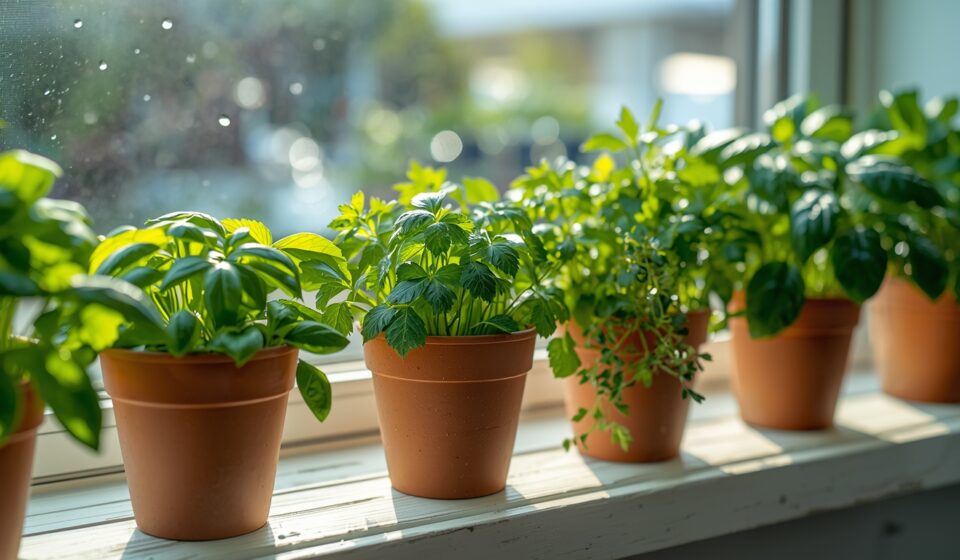
Containers: Use pots with drainage holes. Terra cotta pots work well because they allow soil to breathe. Size matters—most herbs need containers at least 6-8 inches deep.
Soil: Use high-quality potting mix, not garden soil. Look for mixes labeled “indoor potting soil” or “container mix” that drain well but retain some moisture.
Watering: This is where most people go wrong. Herbs generally prefer soil to dry slightly between waterings. Overwatering kills more indoor herbs than anything else.
1. Basil: The Year-Round Favorite
Basil is surprisingly easy to grow indoors if you provide enough light and warmth. It’s one of the most rewarding herbs because it grows quickly and produces abundantly.
Light needs: Basil is a sun lover, requiring 6-8 hours of bright light. Place in your sunniest window or use grow lights.
Temperature: Keep warm (65-75°F / 18-24°C). Basil sulks in temperatures below 60°F (15°C) and won’t tolerate cold drafts.
Watering: Water when top inch of soil feels dry. Basil likes consistently moist (not wet) soil. Leaves will droop when thirsty—a good visual indicator.
Growing tips: Pinch off flower buds to encourage leafy growth. Harvest regularly by cutting stems just above a leaf node—this promotes bushier plants. Start from seed or bring outdoor basil plants inside before frost.
Best varieties for indoors: ‘Genovese’ (classic Italian basil), ‘Greek Columnar’ (compact growth), ‘Spicy Globe’ (small, bushy plant perfect for containers).
Common problems: Yellowing leaves usually indicate overwatering. Leggy growth means insufficient light. White powdery patches suggest powdery mildew—improve air circulation.
2. Parsley: Hardy and Productive
Parsley is one of the easiest herbs for indoor growing. It’s less fussy about light than basil and produces continuously when harvested correctly.
Light needs: Parsley tolerates partial shade better than most herbs but still needs 4-6 hours of bright light for best growth.
Temperature: Prefers cooler conditions (60-70°F / 15-21°C), making it perfect for drafty winter windowsills that are too cool for basil.
Watering: Keep soil evenly moist. Parsley has a deep taproot and doesn’t like to completely dry out, but soggy soil causes root rot.
Growing tips: Parsley seeds are notoriously slow to germinate (2-4 weeks). Starting with transplants is easier. Harvest outer stems first, leaving the center to continue producing. Feed monthly with diluted liquid fertilizer.
Best varieties for indoors: ‘Italian Flat Leaf’ (strong flavor, flat leaves), ‘Curly’ (attractive, ruffled leaves, milder flavor), ‘Giant of Italy’ (extra-large leaves).
Common problems: Parsley is relatively problem-free. Brown leaf tips often indicate low humidity or fluoride in tap water (use filtered water if this occurs).
3. Chives: Foolproof and Flavorful
If you can only grow one herb indoors, make it chives. They’re nearly impossible to kill, produce prolifically, and add wonderful onion flavor to dishes.
Light needs: Moderate. Chives grow well with 4-6 hours of light and tolerate lower light conditions better than most herbs.
Temperature: Very adaptable (55-75°F / 13-24°C). Can handle cooler temperatures than most herbs.
Watering: Keep soil lightly moist. Chives are forgiving and recover quickly from both underwatering and overwatering.
Growing tips: Snip leaves with scissors 2 inches above soil level—they’ll regrow quickly. Divide clumps every 2-3 years to maintain vigor. Chives benefit from a cold period, so if you bring outdoor plants inside, let them experience a few frosts first.
Best varieties: Common chives (onion flavor), Garlic chives (mild garlic flavor, flat leaves instead of tubular).
Common problems: Truly minimal. Occasionally aphids appear—rinse off with water or use insecticidal soap.
4. Mint: Vigorous and Versatile
Mint’s aggressive growth makes it perfect for container growing—it can’t escape and take over your garden! It’s one of the easiest herbs to grow indoors.
Light needs: Moderate (4-6 hours). Mint actually prefers partial shade and can scorch in intense south-facing windows during sunny winter days.
Temperature: Cool to moderate (60-70°F / 15-21°C). Tolerates temperature fluctuations well.
Watering: Keep soil consistently moist but not waterlogged. Mint is one of the thirstier herbs and will wilt dramatically when dry (but usually recovers quickly after watering).
Growing tips: Pinch tips regularly to encourage bushy growth and prevent flowering. Harvest frequently—mint grows vigorously and needs regular cutting. Repot annually as mint quickly becomes root-bound.
Best varieties: Spearmint (classic flavor for mojitos and tea), Peppermint (strongest flavor, great for tea), Chocolate Mint (subtle chocolate notes), Apple Mint (fruity flavor).
Common problems: Rust (orange spots on leaves) can occur in humid conditions with poor air circulation. Remove affected leaves and improve airflow.
5. Oregano: Mediterranean Flavor Year-Round
Oregano is wonderfully low-maintenance indoors. It’s drought-tolerant, pest-resistant, and provides intense flavor even from small harvests.
Light needs: Bright light (6-8 hours). Oregano originates from sunny Mediterranean hillsides and needs good light to develop full flavor.
Temperature: Average indoor temperatures (65-75°F / 18-24°C) are perfect. Can tolerate slightly cooler conditions.
Watering: Let soil dry out between waterings. Oregano is susceptible to root rot from overwatering. When in doubt, wait another day before watering.
Growing tips: Trim regularly to prevent leggy growth. Oregano can get woody—prune back hard in early spring to encourage fresh growth. Dry leaves retain flavor well, so preserve excess harvest.
Best varieties: Greek Oregano (strongest flavor, best for cooking), Italian Oregano (milder, sweeter), ‘Compactum’ (dwarf variety perfect for small pots).
Common problems: Overwatering is the main issue. Spider mites occasionally appear in dry indoor conditions—spray with water or neem oil.
6. Thyme: Compact and Productive
Thyme’s small size and drought tolerance make it ideal for indoor growing. It’s slow-growing but steady, providing continuous harvests throughout winter.
Light needs: Bright light (6-8 hours). Thyme needs good light but isn’t quite as demanding as basil.
Temperature: Prefers cooler temperatures (60-70°F / 15-21°C). Tolerates drafty conditions well.
Watering: Very drought-tolerant. Let soil dry completely between waterings. Thyme’s biggest enemy indoors is overwatering.
Growing tips: Harvest by snipping off tips or individual leaves. Thyme grows slowly, so don’t over-harvest. Provide excellent drainage—add extra perlite or sand to potting mix.
Best varieties: English Thyme (classic culinary variety), Lemon Thyme (citrus notes), Caraway Thyme (unique flavor), ‘Elfin’ (miniature variety).
Common problems: Root rot from overwatering. Fungus gnats can appear in consistently moist soil—let soil dry out more between waterings.
7. Rosemary: Challenging but Rewarding
Rosemary has a reputation for being difficult indoors, but with the right conditions, it thrives and provides amazing flavor for cooking.
Light needs: Very bright light (6-8 hours minimum). Rosemary needs more light than most herbs. South-facing windows or supplemental grow lights are essential.
Temperature: Cool to moderate (55-70°F / 13-21°C). Rosemary actually prefers cooler temperatures and good air circulation.
Watering: Tricky—soil should dry out between waterings but not completely. Check soil 2 inches down; water when that level feels dry. Rosemary hates both constant moisture and complete drought.
Growing tips: Choose a variety bred for containers. Provide excellent drainage (add extra perlite to soil). Mist occasionally to increase humidity but ensure good air circulation to prevent fungal issues. Harvest sparingly from young plants.
Best varieties: ‘Blue Boy’ (dwarf variety), ‘Tuscan Blue’ (upright growth), ‘Arp’ (very hardy), ‘Prostrate Rosemary’ (trailing habit).
Common problems: Powdery mildew (white powder on leaves) from poor air circulation. Spider mites in dry conditions. Sudden leaf drop often indicates watering issues or temperature stress.
Indoor Herb Garden Troubleshooting
Leggy, stretching plants: Insufficient light. Move closer to window or add grow lights. Rotate pots weekly so all sides receive equal light.
Yellowing leaves: Usually overwatering or poor drainage. Let soil dry more between waterings. Check that drainage holes aren’t blocked.
Brown, crispy leaf tips: Low humidity, fluoride in water, or salt buildup from fertilizer. Increase humidity with a pebble tray, use filtered water, flush soil monthly.
Wilting despite moist soil: Root rot. Reduce watering, improve drainage, check roots for mushiness. Severely affected plants may need repotting in fresh soil.
Pest problems: Aphids, spider mites, and fungus gnats are most common. Rinse plants with water, use insecticidal soap, or introduce beneficial insects. Avoid chemical pesticides on herbs you’ll eat.
Slow growth: Normal in winter due to lower light levels. Fertilize lightly every 4-6 weeks. Some dormancy is natural.
Care Schedule for Indoor Herbs
Daily: Check for watering needs (but don’t necessarily water daily). Rotate pots if light comes from one direction.
Weekly: Harvest herbs as needed. Check for pests. Clean dust from leaves with damp cloth.
Monthly: Fertilize with half-strength liquid fertilizer. Check soil for salt buildup (white crust on surface). Flush soil with water if buildup occurs.
Seasonally: Repot if roots are growing through drainage holes or plant seems pot-bound. Replace potting soil annually for best results.
Final Tips for Success
Start small with 2-3 herbs rather than trying to grow everything at once. Master the basics with easy herbs (chives, parsley, mint) before attempting trickier ones (rosemary, basil).
Invest in a good grow light if your windows don’t provide adequate sun. Modern LED grow lights are inexpensive, energy-efficient, and dramatically improve success rates.
Don’t over-fertilize. Indoor herbs need much less fertilizer than outdoor plants. Every 4-6 weeks with half-strength liquid fertilizer is plenty.
Harvest regularly. Cutting herbs encourages new growth and prevents flowering (which reduces flavor). Never remove more than one-third of the plant at once.
Be patient. Indoor herbs grow more slowly than outdoor plants due to lower light levels and controlled conditions. That’s normal and okay.
With these seven herbs and the care techniques we’ve covered, you’ll enjoy fresh, homegrown flavors all winter long. There’s nothing quite like the satisfaction of cooking with herbs you’ve grown yourself—especially when there’s snow on the ground outside!